
Giving Old Factories a New Future: What the Caribbean Can Learn from China's Yangquan Experience
By Jarryl Bryan | Sino-Carib News Contributor
Yangquan City, Shanxi Province, China
What happens to an industrial estate, and the identity of the community around it, when its original economic purpose disappears?
It is a question confronting several Caribbean countries, particularly those grappling with the future of closed sugar estates that once served as the economic backbone of entire communities.
In China's Shanxi Province, the Yangquan Memory 1947 Cultural Park offers a compelling example of how abandoned industrial facilities can be transformed into thriving cultural and tourism attractions while preserving their historical significance.
Once a water pump factory, the sprawling industrial complex has been given a new lease on life, providing visitors with a window into Yangquan's industrial past, social development and cultural identity.
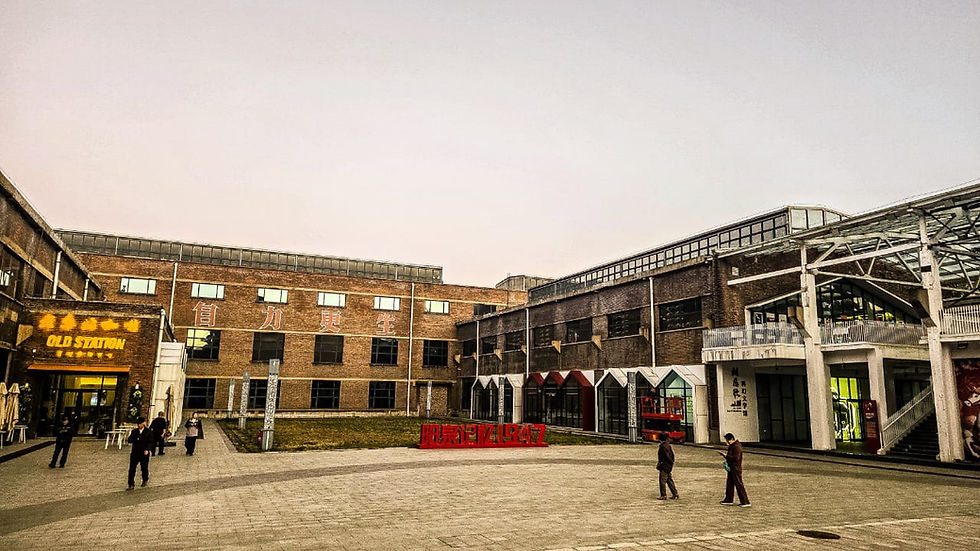
Inner courtyard of the Yangquan Memory 1947 Cultural Park.
Preserving an Industrial Legacy
Located in a province with more than 220 registered museums, Yangquan Memory 1947 Cultural Park stands out for its combination of industrial preservation, historical storytelling and modern tourism.
The park, designated a National 4A-level Tourist Attraction under China's five-tier tourism rating system, takes its name from a defining moment in the city's history.
In May 1947, Yangquan became the first city established directly under the Communist Party of China (CPC), following its capture from Kuomintang forces during the Chinese Civil War.
With a new municipal administration established on May 4, 1947, Yangquan became an important centre in the CPC's early efforts to develop China's industrial capacity.
Today, the approximately 115-acre cultural park contributes to the city's development in an entirely different way.
The machinery that once supported industrial production has become part of a living museum, preserving the ingenuity and determination of the workers who helped build Yangquan's economy.

A metalworking lathe dating back to the mid-20th century is among the industrial artefacts preserved at the cultural park.
Among the oldest exhibits are heavy-duty water pumps manufactured in the late 1940s to remove floodwater from coal mines in the surrounding countryside.
At the time, flooding threatened mining operations and endangered workers. The pumps represented locally developed solutions to a serious industrial challenge.
More than seven decades later, the preserved machinery tells a story of innovation, resilience and the ability of local workers to respond to problems using their own technical expertise.
For visitors, these exhibits offer more than a glimpse of outdated technology. They provide tangible evidence of the industrial foundations on which modern Yangquan was built.

A replica of the old Yangquan Railway Station, which serviced the historic Zhengtai Railway, stands within the preserved factory complex.
A tour guide explained to Sino-Carib News that the park's value lies partly in recognising the historical significance of relatively recent industrial and cultural artefacts.
"We've realised that, besides those cultural relics that have a history of more than 1,000 years, the artefacts that are from the 1950s, 1960s, they have their own value. They also carried a period of history," the guide said.
He explained that sections of the park recreate life during the 1970s and 1980s, allowing visitors to experience aspects of everyday Chinese society during those decades.
This approach demonstrates how industrial heritage can be preserved without restricting a site to traditional museum displays.

A hall of mirrors is among the park's modern attractions, drawing tourists and content creators.
Blending History, Culture and Tourism
Beyond its industrial exhibits, the park celebrates the people and cultural achievements associated with Yangquan and the wider Shanxi Province.
A wall honours hometown figures, including athletes, technicians and other individuals who have contributed to the city's development.
One of its most prominent attractions is a section dedicated to internationally acclaimed Chinese science fiction author Liu Cixin, who previously worked as a computer engineer in the province.
Liu, best known for his novel The Three-Body Problem, became the first Asian author to win the Hugo Award for Best Novel.
His literary achievements are celebrated through displays of his work and science fiction-themed installations, including a life-sized astronaut replica.

A life-sized astronaut replica forms part of the section dedicated to acclaimed Chinese science fiction author Liu Cixin.
The integration of modern attractions with preserved industrial structures has helped transform the former factory into a destination that appeals to different generations.
According to figures released in 2025 by the Yangquan Municipal Bureau of Industry and Information Technology, the park welcomed approximately 2.8 million visitors and hosted more than 250 conferences and events since opening in 2022.
Those figures point to the tourism and commercial potential of repurposing industrial estates, particularly when historical preservation is combined with entertainment, education and public events.
Lessons for the Caribbean
For the Caribbean, Yangquan's experience raises an important question: could former sugar factories and other abandoned industrial estates become centres of tourism, culture and economic activity?
Across the region, sugar production shaped communities, employment, infrastructure and national development for generations.
In Guyana and elsewhere, the closure of estates has left behind not only industrial buildings and machinery but also communities whose identities were closely connected to the industry.
The Yangquan model suggests that these sites need not simply disappear or remain unused.
Former sugar factories could potentially house industrial museums, cultural exhibitions, educational facilities, craft markets and other tourism-related businesses.
Such initiatives could preserve the history of sugar production while creating opportunities for employment, entrepreneurship and community participation.
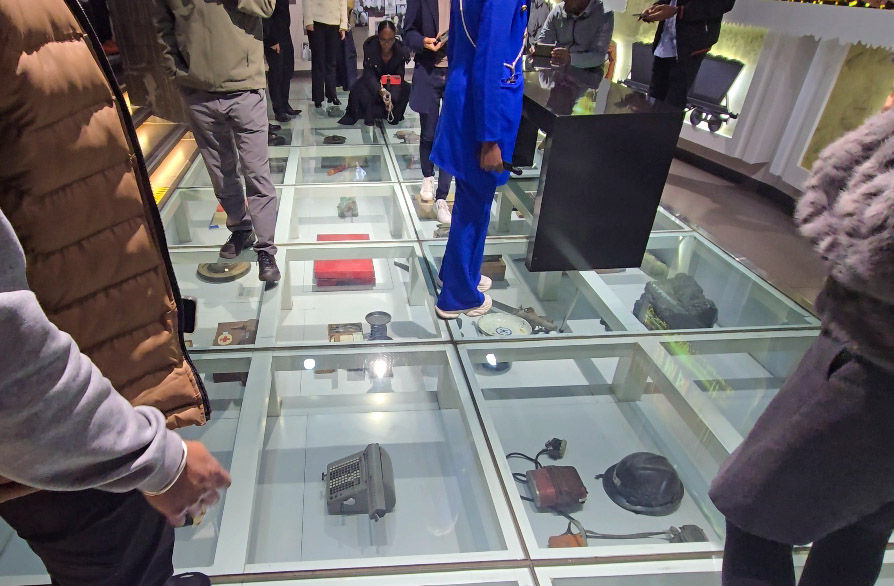
Artefacts from everyday life in the 20th century are displayed beneath a glass-covered floor, combining historical preservation with creative exhibition design.
However, successful transformation requires more than restoring old buildings or placing machinery on display.
Consideration must be given to the structural safety of former industrial facilities, the preservation of historical equipment, accessibility, transportation and the availability of supporting infrastructure.
Equally important is whether these attractions can generate sustainable economic activity and provide meaningful benefits to surrounding communities.
Historians, engineers, architects, tourism planners, cultural practitioners and creative professionals would all have roles to play.
Their combined expertise could help transform abandoned industrial spaces into attractions that accurately tell the story of national development while meeting modern tourism standards.
Yangquan also demonstrates the importance of creative presentation.
From preserved machinery and recreated railway facilities to interactive displays and cultural installations, the park uses its industrial past as the foundation for a broader visitor exper

A vintage computer terminal dating back to the early 1980s is among the many technological artefacts preserved at the cultural park.
A New Purpose for Old Industries
The transformation of Yangquan's former water pump factory illustrates how industrial decline does not necessarily have to mean the permanent loss of a site's economic or cultural value.
Instead, facilities that once supported manufacturing can find new relevance through heritage tourism, education and cultural development.
For Caribbean countries considering the future of closed sugar estates, the lesson is not necessarily to replicate China's approach in its entirety, but to examine how industrial heritage can become an asset rather than a liability.
The region's sugar estates carry histories of colonialism, enslavement, indentureship, labour struggles, technological development and economic transformation. Preserving those histories could offer educational and cultural value while supporting new economic opportunities.
Yangquan Memory 1947 Cultural Park provides a practical example of what can be achieved when historical preservation is approached as an investment in the future.
And for Caribbean communities whose identities remain intertwined with industries that have long since declined, it offers a reminder that while factories may cease production, the stories they leave behind can continue to generate value for generations to come.


Comments